Making a living vs. making art

In this article, cropped-mg_0080-version-32.jpgthe writer claims that as newspapers die so do writers’ opportunities to work, write, and get paid, while improving their craft. The MFA is no replacement as many force aspiring writers to take out loans, digging themselves into ditches that they will never be able to get themselves out of based on the skills gained in the MFA. He laments the loss patrons and the artists who created magnificent works with their financial support.

I agree with some points made here, but not all of them. I agree that the MFA is not worth going into debt, but not all writers/artists want to write/make art for a living. In an interview Cate Marvin said: “One cannot have ‘success’ in poetry. As a poet-friend of mine once said, ‘If I wanted to be successful, I’d have become a lawyer.'” And precisely because poetry has no monetary value, no aspirations for success, it is free to fend for itself, to dig out a space for itself that is not shaped by market demand.

Whereas art forms that do have potential to shower their creators with money are actually more dangerous. My sister and I are both artists. I am poet and Sonnet, my sister, is a singer and songwriter. Because I have never believed poetry will gain me a viable income, I’ve been forced to define success on my own terms and not on how people pay me, and I’ve built up my resume in other areas. My sister, on the other hand, has had success defined for her by a rabid dog, the music industry. She has been getting by on singing and big promises that have yet to fully pan out. I admire my sister for her stalwart pursuit of her craft as her primary income. No one I know is more dedicated to her art than Sonnet. But even with successful commercial campaigns, a fantastic first EP, gigs around LA, and a making it to the top 12 of the reality TV show Rising Star, it has certainly been the much harder road. She is living the dream, pursuing her dream, but it comes with high costs of inconsistency and never knowing what’s around the next corner.

William Carlos William points out not all artists need to be paid for their art or embrace the starving-artist model. I’m interested in finding this sustainable solution–the middle ground between crying about the loss of appreciation for the arts, and complaining about work that I don’t want to do, and starving for my art.

I think the worst part of this search for middle ground is that it will never be the same for every artist. There is no model I can follow, I have to find it for myself. William Carlos Williams found being a doctor as equally fulfilling (and inspiring) as writing. I am 100% sure being a doctor would not be a sustainable career for me. As the 5-9 interview series has highlighted, what works for one artist will not work for another. And even what has worked for me one year may not work the next.

At dinner with other writers and artist not long ago, one artist who was a new father asked the group if we would wish for our children to have the desire to be artists/writers when they grew up. The responses were mixed, but the majority said No! Life would be so much simpler, and perhaps even happier, if our unquenchable desire to create did not demand so much of our time/money/space. The desire to make art is a gift, a joy, a purpose, a calling and–at the risk of sounding overdramatic–it is a burden.

Rebecca Talbot: Essayist and Orchard and Farm Marketer

Writer picI first met Rebecca at a fortuitous holiday party in the neighborhood, when our mutual friend introduced us by saying, “You both write. You should talk.” We did talk and now I count her among the few writer friends who have seen me Pilox at Women’s Workout World. This is a testament to her kindness and grace, which is evident in all her essays and stories that I’ve been lucky enough to read.

I hope you will be as inspired as I was by her thoughtful interview about her own diligent writing practice, finding inspiration in other art forms, and how gears and gauges are like words and sentences.

What do you write? How do you write it?

I write nonfiction and sometimes fiction.  Fiction always feels like giving myself a break from nonfiction because I tend to write essays that require months of picking away at research.  But no matter what the genre is, I write slowly.  That’s probably a matter of not making as much time for writing as I could, but I also like to think the story or essay is always there with me, walking around with me, and when I spend that much time with it, I finally get to know it better and realize what it’s missing.

There was a short story I was working on for three years, off and on, and it never felt finished.  Then last January I was with my in-laws and while I was looking at a book of M.C. Escher’s artwork, I found an image that brought the story together and became central to its meaning.  Then on the flight back I was reading Zadie Smith’s essay, “That Crafty Feeling” in her collection Changing My Mind, and it made me realize some super annoying things I was doing in the story that definitely needed to go.  I revised the story again, sent it out, and Apeiron Review published it. 

There’s definitely a hidden snare, there, too: Everything can be improved, and you can’t wait forever for the right piece of information to drift along.  But I do find it comforting that if a story or essay isn’t coming together right now, I may have the resources later.

What are sources of inspiration that you return to?

Inspiration means two things to me: first, what sources tend to spark ideas, and second, what sorts of things help when I get stuck.  Social history sparks ideas.  I like to know all sorts of nutty things people were up to in the past.  I’ve been reading a lot about Romantic era scientists and poets lately.  The Age of Wonder, Richard Holmes’s chronicle of the relationships between the poets and scientists of that era, makes me want to write at least eleven books.

When I get stuck, I turn to visual art, live lit, and poetry.  I feel more inspired to write after I’ve browsed an art museum or gallery or spent an evening at the Uptown Poetry Slam.  It helps me loosen up, not take myself so seriously, and just be part of the conversation.  Poetry on the page helps too—I guess it moves me out of perfectionism and into joy.

Can you tell us a little bit about your day job and how you got there?

I’d been an adjunct for five years, up until 2013.  I loved teaching, but it took everything I had.  Weekends, evenings, and early mornings all went to lesson planning and grading.  I wrote one story during the whole five years and it was for my mom, for Christmas, because she specifically asked me to write something.  Eventually I gave up teaching and began freelance tech writing.  The projects came in bursts and between bursts I could work on projects of my own.  That was ideal for a while, and then the projects came in less frequent bursts, so I started working for my sister’s company, marketing orchards and small farms.  Right now, I am doing that and working in a university writing center, which has brought many of the aspects I loved about teaching back into my life.

How does it challenge/influence/inspire your writing life?

I love this question.  Is it okay to give a shout-out to my dad, who turns 60 this week?

Of course!

My dad will spend all day working on pharmaceutical packaging equipment, facilities maintenance, autoclaves, or whatever else he’s assigned, and then he’ll come home, eat dinner, and head out to the barn to fix old cars.  He just loves the materials.  He loves lifting large metal things on jacks.  He loves gears and gauges and catalytic converters and pumps.

I think I’m the same way about sentences and words.  I love these materials.  Any day I get to spend with the written word is a good day.  I believe that good, clean writing brings beauty into the world—whether it’s good copy for a good cause, a clear pharmacology report for a pharmaceutical company’s investigational drug, or a gripping essay in Harper’s.  The marketing job allows me to do lots of writing, and that feels fulfilling.  It is a challenge to find time to work on my own projects, and it’s easy for work to just spill over into everything.  (I work with social media.  That’s dangerous.)  Working from home several days a week is good, though.  I had been waking up early and spending a few hours writing, and my goal for October is to get back to that.

You can find more of Rebecca’s fine writing on her client’s blogs and in Curator Magazine where she inspires us with an interview with Jazz musician Ron Thomas.

A Shout out to St. Pachomius

In the latest Image Journal update, they reviewed St. Peter’s B-list! They even gave a shout out (bolded below) to my poem, “St. Pachomius of the Unemployed.” Totally made my date

St. Peter’s B-List by Mary Ann B. Miller

St Peter's B-ListA chorus of diverse voices brings the saints to life in unexpected ways in this spirited collection, St. Peter’s B-List: Contemporary Poems Inspired by the Saints. This is a highly enjoyable book, well-developed and curated by Miller, a gifted editor who has gathered over 100 poems on the saints without redundancy or narrowness. Some of the speakers are parents, deep in the trenches of everyday struggle, as in Martha Silano’s opening poem, “Poor Banished Children of Eve.” It begins as a kind of creed (“I believe in the dish in the sink”) then dips headlong into a version of the Lord’s prayer: “Lead us away from the temptation to chuck it all flee / to Thetis Island and glory be to dishwashing liquid / and the sponge glory to the microwave and Mr. Coffee.” Further along, Brian Doyle builds a wonderful defense of faith upon the theme of parenthood, beginning with Santa Caterina, who “conversed at length with the One Whom No Name Can Encompass / …he called her dearest daughter.” And for Kelli Russell Agodon, St. Pio (“Patron Saint of Worry”) remains a constant in the unfolding story of motherhood. Along with another friend and mother, she confesses: “We still pray though worry / we’re hard to please.” There’s humor here, too. St. Francis heads to yoga, at home among the Downward Dogs, the Cat, Cow, and Happy Baby poses, and in “St. Pachomius of the Unemployed,” one of the most delightful of the collection, we find the saint striding alongside a downtrodden but dogged pursuer of gainful employment. Even Santa Claus shows up, in an extended conversation wherein St. Nick is unemployed, estranged from his wife, broke, and endlessly thirsty for beer. In balance, there are also breathtakingly earnest poems, like Franz Wright’s stunning “Say My Name,” a poem of longing and loss that hinges on a few spare images inside St. Paul’s. Or Edward Hirsch’s sonically rich triptych “Away from Dogma,” which explores moments from Simone Weil’s biography. And there are poems like “St. Vincent de Paul’s Food Pantry Stomp” in which the saint in question is little more than a name for the speaker, but who still seems to witness and shelter, in some way, that speaker’s humanity. Whether deliberately or otherwise, the saints walk among us through this collection—bright with love, odd, downright scary sometimes—and yet vividly real for each speaker in very personal ways.

Purchase your copy here.

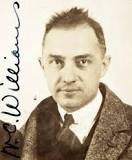
WCW: writer and medical doctor

Despite all my issues with the grand Mr. Williams in my previous post, his “interview” about being a writer and doctor reveals an interesting (and helpful) perspective.  William Carlos Williams above all else is a proponent of language and of medicine. Being in the world helped him write about the world. If he had not been a doctor, it seems he would have not been able to be a poet. His views outlined below, excerpted from The Autobiography of William Carlos Williams, are a kick to get moving. So after you read this, ask yourself what is the other half of my writing practice? What helps me see below the surface of nonsense and humdrum to the substance of poetry?

AKS: So, Mr. Williams, what do you write?

WC: I write poetry, essays, plays, stories, and novels. Please refer to Poetry Foundation for a full listing

AKS: How did you get your start as a doctor and writer?

WC: Right after high school I was accepted into medical school, but soon discovered theater.

“The struggle was on…I thought I’d quit medical school and get a job as a scene shifter! Such was my humility….It cost 25 cents to sit in the top balcony to see plays in those days. I wanted to write, to write plays–plays in verse! I saw the great Ben Greet Players outdoors in the Botanical Gardens. I climbed a ten-foot spike fence around the nearby cemetery to get into that one. I had no money.

But it was money that decided me. I would continue medicine, for I was determined to be a poet. only medicine, a job I enjoyed, would make it possible for me to live and write as I wanted to. I would live: that first, and write, by God as I wanted to if took me all eternity to accomplish my design. My furious wish was to be normal, undrunk, balanced in everything. I would marry (but not ye!) have children and still write, in fact, therefore to write. I would not court disease, live in the slums for the sake of art, give lice a holiday. I would not “die for the art” but live for it, grimly! and work, work work, (like [my] Pop) beat the game and be free (like [my] Mom, pour soul!) to write, write, write as I alone should write, for the sheer drunkenness of it.

AKS: How do you find time to write while also being a full time doctor?

As far as writing itself is concerned it takes next to no time at all. Much too much is written every day of our lives. We are overwhelmed by it. But when at times we see through the welter of evasive or interested patter, when by chance we penetrate to some moving detail of a life, there is always time to bang out a few pages. The thing isn’t to find time–we waste hours every day doing nothing at all–the difficulty is to catch the evasive life of the thing, to phrase words in such a way that all stereotype will yield a moment of insight. That is where the difficulty lies. We are lucky when our lives will send up its pure water. It seldom happens. A thousand trivialities push themselves in front, our lying habits of everyday speech…

AKS: So you mentioned earlier, that you enjoyed medicine…tell us more about that.

It’s the humdrum, the day-in, day-out, everyday work that is the real satisfaction of the practice of medicine; the million and half patients a mand has seen on his daily visits over a forty-year period of weekdays and Sundays that make up his life. I have never had a money practice; it would have been impossible for me. But the actual calling on people, at all times and under all conditions, the coming to grips with the intimate conditions of their lives, when they were being born, when they were dying, watching them die, watching them get well, has always absorbed me.

As a writer, I have never felt that medicine interfered with me but rather it was my very food and drink, the very thing that made it possible for me to write. Was I not interested in man? There was the thing, right in front of me. I could touch it, smell it. I was myself, naked, just as it was with out a lie telling itself to me in the its very own terms. Oh, I knew it wasn’t for the most part giving me anything profound, but it was giving me terms, basic terms with which I could spell out matters as profound as I cared to think of.

[You] naively ask [me], “How do you do it? How do you carry on an active business like that and at the same timefind time to write? You must be superhuman. You must have the energy of two men.” But you do not grasp that one occupation complements the other, that they are two parts of a whole, that it is not two jobs at all, that one rests the man when the other fatigues him. The only person to feel sorry for his is wife. She practically becomes a recluse. His only fear is the source of his interest, his daily goings about among human beings of all sorts, all ages, all conditions will be terminated. That he will be found out.

Forget writing, its a trivial matter. But day in day out, when the inarticulate patient struggles to lay himself bare for you, or with nothing more than a boil on his back is so caught off balance that he reveals some secret twist of a whole community’s pathetic way of thought, a man is suddenly seized again with a desire to speak of the underground stream which for a moment has come up just under the surface.

The physician enjoys a wonderful opportunity actually to witness words being born. Their actual colors and shapes are laid before him carrying their tiny burdens.

For under that language to which we have all been listening all our lives, a new, a more profound language, underlying all the dialects offer itself. It is what they call poetry.

William Carlos Williams takes an interview

“So Mr. Williams, tell me, what do you write?”

Okay. So, WCW died in 1963, twenty years before I was born, and even if he hadn’t, I’m sure he wouldn’t have deigned to speak to the likes of me. I recently read The Autobiography of William Carlos Williams, first published in 1948 by New Directions Books. There are many things to be said about the life of prolific writer and doctor Williams…

Observation #1. He surrounded himself with artists…famous artists.

How did he know so many famous people. He went to school with and was a life long friend of Ezra Pound and H.D., dined with James Joyce, partied with Man Ray and bunch of other artists, conversed with Gertrude Stein, doctored Charles Demuth… the list goes on. Literally the index in his biography could be a who’s who of first half of the twentieth century.

Observation #2. He loved and respected his wife very much, but he had misogynistic (and racist) tendencies.

They leak out the sides of his autobiography and sometimes hit you square in the face. Besides numerous condescending descriptions of women and girls throughout his book. There was this stunning passage:

I have had several but not many intimate friendships with men during my life, patterned, I suppose on the youthful experience of my brother…You could count them surely on the fingers of one hand. On the other hand there is Flossie, my wife, who is the rock on which I have built. But as far as my wish is concerned, I could not be satisfied by five hundred women. As I said, at the beginning, I was always an innocent child.

Why, I remember once as medical student falling in love with the corpse of young negress, a “high yaller” lying stripped on the dissecting table before me.

Men have given the direction to my life and women have always supplied the energy.

There is so much weirdness in that passage. I’ll just let you stew on that for a while.

Observation #3. He is an amazing writer and thinker.

Through at times, I felt I did not like the man I was reading, ultimately he has a thoughtfulness and delicacy with words–that made his autobiography a page turner. As a case in point and prelude to my next post–an “interview” with WCW about being a working writer–I’ll leave you this:

And it must be said of a life of confinement, if he survives it, that much of the world’s greatest writings has waited on a removal from the world of affairs for its doing. Concentration is what a man needs to bring his mind to harvest. We may and he will, whoever he may be, change ourselves by our contacts, but to drain off the good we must find quietude. The monk’s cell is ideal for the purpose…it represents a quiet relief from economic pressures: one can write then. Prison, though, is better, or seems to have been so in the past. Aesop was a slave; many a Greek did his best work in exile to Sicily or even the next city. Sappho must have felt mightily confined by Lesbos; Raleigh wrote well in prison: Pilgrim’s Progress came from confinement–as birth does also–but the best of all was Don Quixote, when Cervantes was put in jail…

The poem is a capsule where we wrap up our punishable secrets. And as they confine in themselves the only “life,” the ability to sprout at a more favorable time, to come true in the secret structure to the very minutest details of our thoughts, so they get their specific virtue.

We write for this, that the seed come true, and it appears to be this which makes the poewcwm the toughest certainty that life experience acknowledges.


Where are they now?

A lot of things worth talking about have taken place in the last year!

Lana Spendl has been tearing up the flash fiction pages: Read her piece “The Virgin” in Prick of the Spindle and look for her forthcoming piece “Soap Bubble Words” in Monkeybicycle.

Paula Carter has been making it waves on the nonfiction circuit both on stage and on the page. Listen to her podcast from Second Story in her piece Lessons from Almost-Mother or read her recent essay in TriQuarterly.


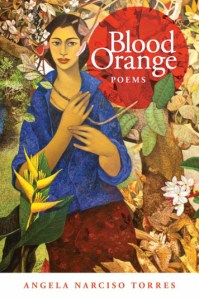
And Angela Narciso Torres published Blood Orange  available via Aquarius PressSmall Press Distribution,  and Amazon.  Watch the book trailer for Blood Orange! Yes, a trailer for a book!

Congrats you lovely ladies and writers on your accomplishments!

Lana Spendl: On the Solitary & the Social

I had the great privilege of traveling to Nepal with fiction writer Lana Spendl a few summers ago, where we walked down streets with our professor, Samrat Upadhyay, who was constantly being recognized as the celebrity author he is. Shopkeepers would run to their nearby homes to grab their copies of his novels and ask for his autograph and how they too could become published storytellers. As we walked around Kathmandu, we discussed the nature of reality or intention–Lana is not often one for small talk. Her stories too have a richness that is above average. You can find her story “In the Bascarsija Quarter,” which was nominated for the Pushcart Prize, in The Greensboro Review Issue 91.

She recently agreed to take part in our working writers series. Once again, I’m inspired to put pen to the paper after conducting an interview. Here’s what she had to say:

lana

What do you write?

I write short stories and flash fiction. I was born in Sarajevo, Bosnia, and spent half of my childhood in Avila, Spain, due to the Bosnian war. Most of my stories take place among the churches, mosques and cobbled streets of these two cities.

I’m working on a collection of stories which takes place in Sarajevo about ten years after the peace treaty was signed. This falls around 2005, the year I last visited the city. My stories follow various men, women and children who live in the Grbavica neighborhood in a tall building that overlooks the River Miljacka. The stories portray widely different characters, from a middle-aged alcoholic man who lives with a war widow to a short-tempered female lawyer who is afraid of betrayal and abandonment. I find it helpful to write about characters who are facing challenges different than mine; this allows the characters to remain self-contained and prevents a lot of my personal thoughts and feelings from pouring into the story.

I started writing the flash pieces recently. They offered me a break from the story collection. The collection consists of highly traditional stories written in third person. The flash work has allowed me to go back to playing with first-person narrators. Also, while working with flash, I do not feel constrained by setting or style and play with any topic that captures me in the moment.

In terms of process, I begin stories with an image—although sometimes I picture entire scenes involving tree-lined streets and winds that run the leaves across the pavements—and then I focus closely on one character and record everything he/she does within this space. One action leads to another, and, in first drafts, it is the story that leads me along. In revision, I often rewrite the story from the beginning, and much of what I wrote in the first draft gets thrown out. Sometimes my characters change drastically from one draft to another. A neurotic young man in a first draft may turn into a gruff octogenarian in the second.

What are the sources of inspiration you return to?

I assume you’re asking about literary inspirations. I love Virginia Woolf, Colette, Hermann Hesse, Nabokov, and highly personal philosophical works, like Seneca’s letters or anything by Rousseau or Nietzsche. I also enjoy Russian fiction with an absurdist bent. And I love the sounds and images in Lorca’s earlier poetry.

When I think of Woolf, I think of sunlight, glittery water, rhythm. She gives the most basic elements of life meaning—I’m thinking about her essay on the moth now—and reading even a page of her writing makes me feel more involved with my own life. The Waves is my favorite novel of hers. Colette gives a preciousness to memory. I love her tender treatment of her mother and even the detailed way in which she arranges jars on a table. Nabokov’s style is powerful. Reading him sharpens my own images. Among the Russians, Vladimir Voinovich is a writer I’ve been reading religiously. Hilarious, dark, sometimes cartoonish. I also recently watched the movie Adore. Great character study. It takes place by the Australian seaside, and it portrays the sexual relationships two close female friends have with each other’s sons. The movie is subtle and honest, and after watching it, I discovered that it was based on Doris Lessing’s novella The Grandmothers. I’m reading this piece now, and there is much to admire about the way the narrator plays with point of view and space and the fascination people have with the lives of others. This kind of fascination—the projections we cast on others—is something that interests me very much.

What do you do to pay the bills?
I work full-time as an academic advisor and part-time as adjunct faculty in fiction at Indiana University. I completed my MFA a few years ago and moved into an MA program in Hispanic Literatures. After finishing it, I started a PhD in Spanish Literature. I was drawn to twentieth-century Spanish novels and poetry—they rely heavily on themes of trauma and memory—but since the PhD program was a critical one, I felt that I had to keep on mechanically deconstructing texts and language when all I wanted to do was construct. The creative and critical mindsets seemed to work in opposition to each other, and I decided to leave the program in order to have the space to write.
I was lucky enough to land a position in advising shortly after leaving the program—it was the job I wanted most in Bloomington, because it would allow me to keep on working closely with students and to remain in the academic environment—and I was offered a creative writing teaching position the same summer. I truly enjoy both jobs. They allow me to remain in an environment in which people talk about ideas, and they allow me to help students in matters relating to their education. This is a matter close to my heart. I also enjoy interacting with people all day. It compliments my writing well, since writing is a solitary endeavor and I’m a very social person.