Two Feet In

Last post I spoke about the prospect of internships. It seems internships are infinitely easier to get interviews for than jobs. It turns out nonprofits doing good in the world are looking for qualified and excited free labor. I am now interning at two nonprofits aimed at bettering the lives of children. At Open Books, I will be a site coordinator for a reading buddies program at an elementary school, combating the literacy crisis in Chicago, one book, one buddy at time. The other internship is with Starlight Foundation, which is an org that aims to improve the quality of life for sick and hospital-bound children. At this org, I will be a researcher and grant writer. All the while, still writing test prep cirriculum to help pay the bills. Check out my blog post at Open Books.

So if you are in the Chicago area, and you want to volunteer to read or write creatively with students in elementary or high school, OR if you work for a corporation that looking to give money away to good causes: let me know!!

Internships and Landscape

In the spirit of my last post (doing what you love for free) I have accepted an internship at this awesome Chicago org called Open Books.  I am excited to be part of an organization that is working to combat the literacy crisis in Chicago. Did you know: 53% of adults in Chicago low or limited literacy skills? (I stole that fact from the Open Books website–where you can find more about literacy in the U.S.)

While I hope to learn about how Open Books works as an org, build some great relationships with the students and with teachers and staff, I also hope I learn about the landscape in Chicago. Who and what is where and how.

It’s funny. Biking around Chicago actually makes it feel smaller and easier to navigate. I think it has something to do with being a part of the landscape you are traveling through (whereas in a car you separated). I hope that this internship does a similar thing– that through relationships I will create a network that make Chicago feel less like black hole into which I have been submitting my resume and work applications. And more like a city of Big Shoulders.

Chicago has a lot of nicknames. Big Shoulders come from Carl Sandberg’s poem “Chicago”:

Hog butcher for the world,
Tool maker, stacker of wheat,
Player with railroads and the nation’s freight handler;
Stormy, husky, brawling,
City of the big shoulders.

Do What You Love

An old man, I don’t remember where or who he was, gave me the following advice:

Do what you love. Do it for free. Someone will notice you doing it and will pay you.

Now, I’m not sure it quite so simple as that. First, it means you must narrow down the things you love into one orchestrated movement. Or at least concentrate on one love for a while. It means that you have other avenues for putting food on the table, and quarters in the washing machine. Being gifted with supportive husband and a hard time getting an interview, I have had the opportunity to think again about this optimistic advice. And decided to put it into action by looking for volunteer opportunities and internships. I am little embarrassed to admit that it has taken me this long to realize this opportunity to do the things I love. I have been so concerned with being productive during my unemployment, I have felt guilty participating in things that bring me joy. Attitude adjustment in progress.

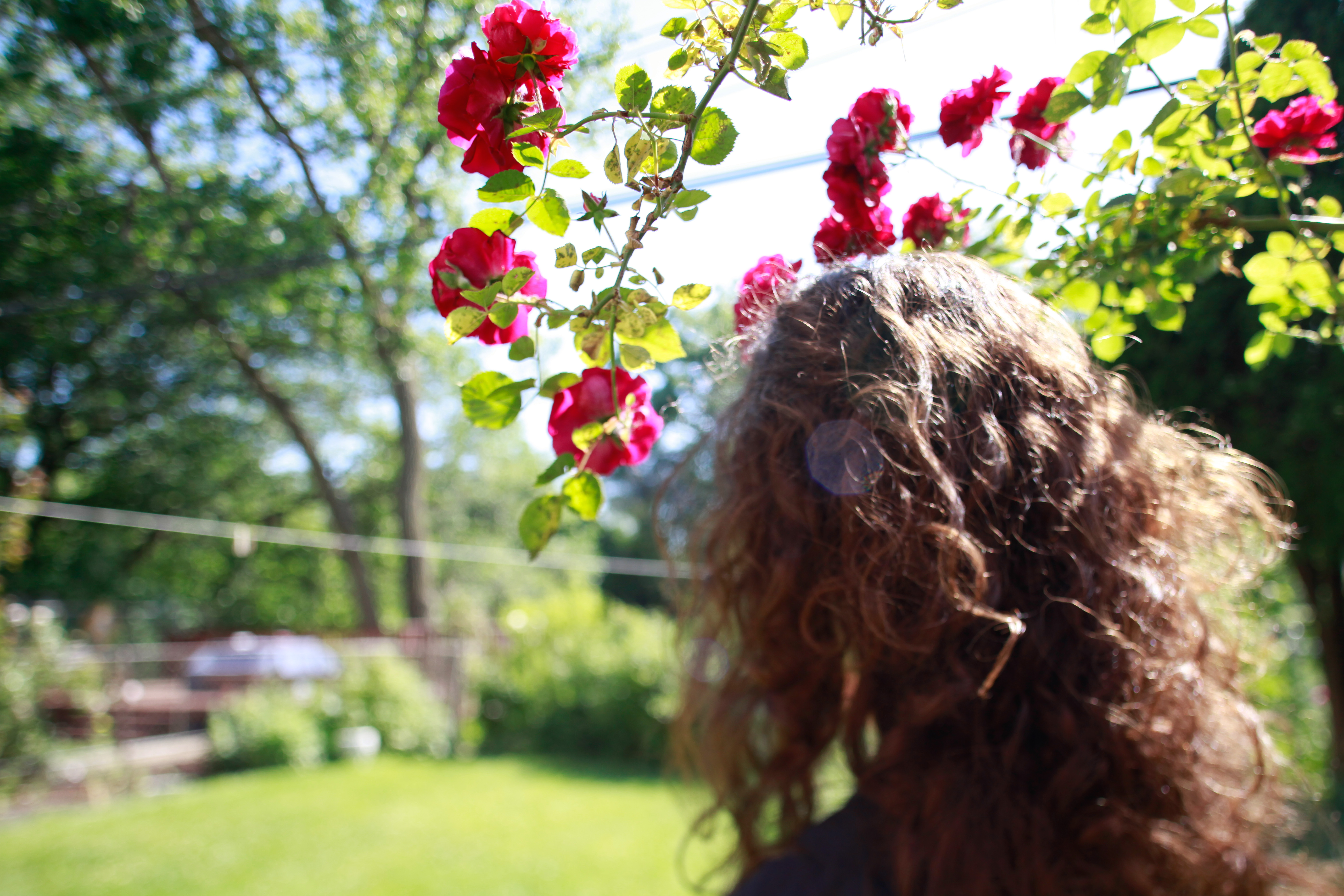
Here are some things I love: Vegetable and flower gardens, writing, reading, solving grammar problems, doing something good for my community, getting to know my neighbors, drinking wine, re-arranging furniture, petting my cat, watching old movies, canning tomatoes.

What do you love?

Image

Networking, to the tune of…


1. Networking, verb: looking for people to help you get ahead in the business, any business.

2. Networking, verb: A. getting to know people who have similar interests to you or someone you know. B. taking the opportunity to geek out with people who share the same peculiar knowledge set.

I used to think of networking as defined above definition #1. And, it made me feel greedy and little slimy and generally unpleasant. So I decided I was bad at it and did not want to work to improve. However, a friend– more of an acquaintance really, Grace, redefined it for me as above definition #2. This felt like something I could get behind, a skill I wanted to learn. While similar to small talk, networking has the opportunity to open doors to new friends, jobs, definitions, and avenues.

So I’m working on my networking skills. Today, when I bought a couch off craigslist I had a nice chat with the fellow, an owner of a brand marketing graphic design firm. It was an overall enjoyable experience. He was jovial, and I worked to be outgoing. I’m also sprucing up my LinkedIn page.

Here, here to networking. 

Field Notes from Washington Park

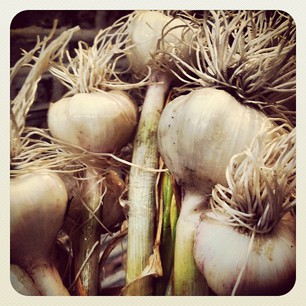
Today, I began volunteering at Green Youth Farm. And let me just say an obvious axiom about poetry: It doesn’t happen just on the page or in the classroom or when reading a book curled up on the couch or in an airplane seat. It happens in the garden. Poetry is a kind of magic. And so is garlic. You dig a hole for a clove of garlic, you cover it with dirt, with hay, you wait and wait, it grows and grows a mathematical white dress in the unseen places below the dirt near the earwigs and the worms, the green shoots and scapes escape through hay signaling life, life, life. Then you assign a group of teenagers, and an odd poet to pull up the garlic, to tie it in bundles and hang it to dry from the hoop house. There are a fifty or so poems right now in a hoop house in Washington Park on Chicago’s South Side marinating in the summer heat, drying into the kind of poetry you can eat.

Garlic

a kind of magic

Dinner with Poets, a list.

I recently ate dinner with 4 other poets. 2 have numerous books, 2 have chapbooks, 1 had some light journal publishing. 3 drank wine. All sipped water. 1 swallowed beer. 2 were female. 3 male. 4 married. 1 divorced. One tenured, 3 untenured, 1 soon to be unemployed. 1 had stellar white hair. 1 wore his shirt unbuttoned under a sports coat. 1 had scallops, 1 ate salad, 3 savored a variety of sandwiches. What do you do when you are prolific writer and your publisher won’t publish your newest manuscript until 2013, one asked. 3 scoffed. 1 smiled. One mentioned the Poetry Foundation. 4 scoffed. 1 mentioned he needed his girlfriend to move a way, a new woman to sleep with, some large regret and then he would be able to write again. 4 laughed, smiled politely. 2 spoke of baseball. 2 spoke of a former acquaintance. 2 took leave for the bathroom at different times. 4 meals were comped by the English Department. 1 meal was not. 1 platter of mussels were shared by the table. The meal ended 30 minutes before the one resident poet would be introducing the one visiting poet. One poet, who was doing the introduction of the other poet, would speak for more than 10 minutes about how the visiting poet continued to be a figured that crossed his path, whom he admired. 1 poet would wish there was another poet who could set the standard of how to introduce other poets with as much admiration and fewer words.

Rejection Season

I tell myself not to worry about this onslaught of rejections by post and by email. At least some of the rejects are what I term “nice” rejections. The second or third tier rejection slips with comments and signatures. I remember back to the manuscript-overflowing shelves (both literal and virtual) at IR and know not to take it personally. Rejection season leads to summer, which is also known as manuscript editing, revising, polishing season, and summer leads to autumn when school and journals are back in session and postal workers (both literal and electronic) everywhere are delivering those shiny new pages of stellar poetry.

Thesis Readings at IU

Image

What a pleasure to see and hear Deborah Kim, Pablo Pinero Stillmann, and Bethany Carlson read their luscious and shimmering, haunted and inspiring poems and short stories on Friday the Thirteenth. And what a pleasure to be an audience with Lana Spendl, Sarah Suksiri and all the others who believe in the “unequivocal glamour of language” (a la Bethany Carlson)

Fiction and Mops

courtesy of http://www.appolicious.com/

I clean a yoga studio in Chicago for three hours once a week in exchange for unlimited yoga classes. (In reality this equals about 2-4 classes a week.) And while I mop, vacuum, dust, and wipe I revel in three hours of podcast joy. This last week I covered a shift for another yogi-cleaner so by the second shift I was out of podcasts: I was caught up on This American Life, The Moth, Poetry Off the Shelf, Radiolab! Left to peruse the podcast warehouses, I found New Yorker’s aptly named Fiction Podcast. In this podcast, usually 30-40 minutes long, a NYer published writer reads another NYer published writer’s story–from ANY magazine since the New Yorker started printing fiction! Not only does this podcast provide storytime, but also insightful conversation between author and fiction editor, Deborah Triesman. Now, I love any good storytime but I’ve also enjoyed hearing writers talk about other people’s work. Today, I entered into the world created by Bruno Schulz. He’s a surreal and amazing writer from the 1930s who I had never heard of. Now I can say his writing is completely enchanting and it will keep you warm, and walking. But you don’t have to take my word for it….take a look, and listen, HERE. Enjoy!

April is Poetry Month

Le Guitariste

How are you celebrating poetry month? Are you going to download The Poetry Foundation smartphone app so you can scroll through their poetry archives during your between minutes to delight your senses? Are you going to memorize “The Love Song of J Alfred Prufrock”? Let us go than you and I / when the evening is spread out against the sky / Like a patient etherized upon a table… Perhaps you will write an abecedarian for the person you love?  However you choose to celebrate the month, let me know.

And remember, poetry is not restricted to language and poems. One might even say that a poem is where poetry dips down into language and the poetry itself is a quality and intensity beyond words found in lanscape, music, twilight, Picasso, the ripple of horse tail and the paper dolls in your attic. So, I hope you enjoy poetry this month, in all its instances.

Here are some resources for that language kind of poetry:

10-20 minute podcasts on poetry while you do your dishes: Poetry Off the Shelf

All about  abecedarians and acrostics here.

Bartleby’s online has a ton of classic poems like “Love Song”